Category Archives: Biology

W.I.C.O.R

Any educator in a high school should recognize the acronym WICOR as an AVID instructional strategy.  Specifically, WICOR stands for Writing, Inquiry, Collaboration, Organization, and Reading/Real-World Connections.  AVID is an acronym for Advancement Via Individual Determination.  Most schools in  Southern California actively support AVID and the use of the WICOR strategies.  In fact, Heritage High School is a demo school for AVID.  All teachers are requested to use WICOR strategies in their teaching because it is active, engaging, and is academically beneficial to the students.


Writing strategies                                                                           

  • Cornell Notes/Learning Logs
  • Quickwrites and Reflections
  • Process Writing
  • Peer Evaluation
  • Authentic Writing

Inquiry strategies

  • Skilled Questioning Techniques
  • Costa’s Levels of Thinking
  • Socratic Seminars
  • Investigations
  • Questions that Guide Research

Collaboration strategies

  • Socratic seminars
  • Philosophical Chairs
  • Group Activities
  • Peer Editing Groups
  • Service Learning

Organization strategies

  • Binders and organizational tools
  • Calendar,s Planners, and Agendas
  • Graphic Organizers
  • Focused note-taking system
  • Study groups
  • Project planning and SMART goals

Reading strategies

  • Deep Reading Strategies
  • Note-taking
  • Graphic Organizers
  • Vocabulary Building
  • Summarizing
  • Reciprocal Teaching

WICOR in my classes. 

Writing: All of my classes, Biology and Anatomy and Physiology use many of these strategies on a daily basis.  For instance, my students are required to take Cornell Notes from readings in the textbook.  If a Crash Course video is assigned, the students complete a GIST Summary, which is far more rigorous than simply writing down notes.  My students have completed Quickwrites and Reflections (along with SMART) goals.  We also use a Science Interactive Notebook, which truly helps with writing, organization and reading.

Inquiry: ‘To date, the classes have taught about Costa’s Levels of Thinking.  In addition, the classes have participated in Socratic Seminars and Investigations (Labs).  I am currently working on having them create questions to guide research.  At this date and time, I am responsible for creating guided questions and asking open-ended questions of the students.

Collaboration: All classes participate in group activities, including Socratic Seminars, Philosophical Chairs, and projects.  I have recently developed a real appreciation for think.pair.share.  I have been using it a lot lately.  Today, the students observed a peer “grading” their notebook.  Then the two students switched notebooks and they graded the other persons.  This is not for a grade.  It is an easy way to have them create peer editing groups and evaluate what they each need to complete before turning it in in a week.

Organization: Although began the year with digital notebooks, I was unable to achieve buy-in from a large number of students.  When it began to impact my pacing, it was time to stop and switch back to a traditional ISN.  I also strive to keep my students on track with being organized.  I put an outline on the board every Monday that includes information for in-class activities, and homework information and due dates.  Some students take photos of the whiteboard.  The students were also given an agenda record keeping planner to use to stay on top of assignments.  The students fill these in on Monday and receive a stamp.  Last, but not least, the students have access to their Haiku (Power School Learning), where the assignments are also posted under Weekly Overview.

Reading:  There are lots of reading assignments in Science.  I also either create graphic organizers or have the students replicate one in their notebook to use for assignments.  I began using Desmos a while back, which helps with vocabulary building.  The students are also very familiar with the concept of organizing because their classes have been AVID centered for many years.


My classes have participated in Philosophical Chairs discussion, and more recently have begun reading up for their next Socratic Seminar on Cancer.  The students also regularly work together on group activities, such as creating a poster of Mitosis with labels and definitions.  They also recently completed a five-day project for Photosynthesis, culminating in a slides presentation.  I could go on-and-on, but for the most part, my instructional style lends itself most easily to this type of instruction.

I tend to be pretty reflective about my instruction and am always self-evaluating, to do that requires deep analysis.  I create a checklist based on the items and/or information I can find about the strategy.  After that, it is simply comparing what I already do to what I have not explored yet.  At least with regards to WICOR, it would appear I am on top of it.
Student engagement shines on

My biology students surprised me today.  I mean really surprised me.  Shame on me.

My students just started a chapter on Mitosis (cell growth and division).  As we were discussing the cell cycle, I asked them to examine the picture of the cell cycle and infer information from the picture.  They were asked to determine which phase was longest.  During the direct instruction, I explained to the students that Gap 1 and Gap 2 are like red/green checkpoints.  I gave them two questions to review for the next day: (1) What has to occur for Gap 1 to turn green and allow the cell to move to Synthesis; and, (2) What has to occur for Gap 2 to turn green and allow the cell to move into Mitosis.

Then I asked the students, “what would happen if the cell keeps replicating and doesn’t stop”?  Some students in my four classes went right to cell overgrowth and Cancer.  However, some of the students did not make the connection right away.  So, I followed up asking, “What if you have brain cancer and it is benign, should you be concerned? and Why”?  I had the think.pair.share symbol up.  So they thought about it, shared with their neighbor, and then we shared out.  The students were right on the money, telling me it is something to worry about because even if benign, a constantly growing mass in your skull will quickly damage the brain as it encroaching on its real estate.

A little background: I teach two different courses.  I have four Biology classes full of Freshmen and Sophomores.  I also have two Anatomy & Physiology courses full of Juniors and Seniors.   I have already created both classes’ finals.  Both groups have a one hour written final.  Both also have a one hour AVID Socratic seminar.  The topic for Biology is Human Genome Sequencing.  The topic for Anatomy is two articles about Cancer.  I made this assessment choice because the Lexile reading score for one of the Cancer articles is in the 1200-1300 range, and would likely be difficult reading for my Freshmen, Sophomores, IEP, and/or EL learners.

As I recognized how “into” the topic my Biology students were during the discussion, I decided to give them a choice.  I like to do this because they are teens, growing into adults and should be making responsible academic decisions.  I explained to them my rationale behind choosing the articles for the two different classes.  I even told them I had to look up a few words.  The students knew this meant it was not an easy read.  Despite this, all four classes really impressed me by voting for the more interesting, if difficult articles.  There were some students who voted for the assignment they “perceived” to be easier, but the majority won out.

So often, as teachers we strive to get “true” student engagement.  Not compliance, not I just want a good grade, but the real deal.  When it happens, it is like a bright light clearing out all of the darkness in the world.  Hope reigns supreme.  It is not just the faith I have in my students, which is unending.  These students shine on and on and I see real evidence and potential for them to continue shining, hopefully becoming life-long learners.

I am so incredibly proud of my Biology classes.  Of course, I will be scaffolding and reviewing the articles with each of the classes.  This is the first time I walk them through critiquing an article and preparing a claim, and text evidence to support their position.

The students often ask me why I became a teacher.  Sometimes, I get comments like, “I could never be a teacher, how you are so patient?”  The truth is, I will never give up on my students; every day is a brand new day; a fresh start; a new beginning.  I just have to figure out what turns my students’ lights on and how to keep them on.


Using Quizizz in Class . . . a Review

Today was the first day I had ever used Quizizz in class.  I made up several of these to engage the students in review for the next two weeks.  But, today was a trial run so I made a Quizizz based on class expectations and consequences.  Then, I piggybacked another practice Think . Pair . Share with the classes about the game site.

Pros: The game is easy to set up, copy questions and answers and finish.  It also has several positive features such as timer on/off, memes on/off, randomizing questions and answers, providing feedback, review for answers, and my favorite, a leader board.  The leader board helped the students see how they were doing.  We were able to review the questions an answers at the end.

Cons:  Students are much less familiar with Quizizz than Kahoot.  Although selected to work, the music would not play.  The print is very tiny (even on a projector) for the information on how to join the game, and the code number.

To be able to compare it to Kahoot, I will experiment with Kahoot tomorrow.  I have a Biology Quizizz I had previously created, but I will convert it into Kahoot and provide a comparison for final review.


Case Studies for Teaching

I recently obtained a membership to the National Center for Case Study Teaching in Science (NCCSTS).  It was not as easy as you would expect.  The company is extremely strict about handing out teacher notes and answer keys.  You must prove you work at a school with an email found on your school webpage, or alternatively, a letter on school letterhead indicating your employment.

I found this site over a year ago, but did not actually gain access until recently.  I was in love the first time I found it.  The case studies are intriguing, engaging, and cross-curricular.  The database currently has 711 case studies in all areas of science, appropriate for different age groups.  In my case, I have been looking for case studies for Biology and Anatomy and Physiology.  You can search by subject heading, educational level, type/method of instruction (discussion, debate, experiment, journal, analysis, etc.), topical area, or even by date.

The mission of the National Center for Case Study Teaching in Science (NCCSTS) is to promote the nationwide application of active learning techniques to the teaching of science, with a particular emphasis on case studies and problem-based learning. (http://sciencecases.lib.buffalo.edu/cs/)

This type of active learning resources fits in well with the NGSS standards and current learning goals for the students.

Designing a meaningful warm-up

Back in the block schedule day, I had an opportunity to provide students with 15 minute warm-ups.  Students were presented with a controversial video, ethical or moral quote, growth mindset message, or a simple question.  The students were required to write one-half page in their interactive notebooks.  Many wrote more.  Then, we had a class discussion about the topics.  Science students are amazing.  They quickly realized they had to really think about the topic.  I often said I did not want the superficial “skipping a stone across the creek” thoughts, I wanted their “throw a large rock into a lake and watch it sink way down” thoughts.  Of course, giving the students examples like this often led to deep thinking as well.  These warm-ups were deeply philosophical, ethical, created moral dilemmas, and essentially great for scientific argumentation, creative and logical critical thinking.  I miss them.

I digress.  Currently I am teaching in a traditional schedule environment, with two late starts: Mondays and Fridays.  Clearly, with such a shortened schedule I do not have time to divert from essential content if I am to meet the students’ learning goals, and daily objectives.  It was about this time that I was found a website Effective strategies for teaching science vocabulary.  There were many, many tips, strategies, and techniques.  I had an idea that became a great warm-up.

It is no secret that the amount of science vocabulary students must learn in a year is incredibly large; far too large to accomplish easily, especially for the EL students.  After brainstorming, I realized that perhaps it would not be so difficult if the students were given a cipher, so to speak.  I had learned about this website called desmos, typically used for math students, but easily modified for my purposes.

The first iteration involved students matching concentration style six prefixes with their meanings.  The second iteration included prefixes, suffixes, or roots with their definitions.  The third iteration added more rigor; students had to match their terms and then google a new word with the same prefix, suffix or root.  Once the students had mastered these different levels (naturally scaffolded as it went through different iterations), I added another step: a collaborative connection.  Now the students had to turn to their elbow partner and share the new words they had found for the same prefix, suffix, or root, and make a connection back to the original meaning.  Most of the time the connections were clear and obvious, but some of the time they were more difficult and required some creative, out of the box thinking.  The last iteration was simply to reduce the number of terms from six to three so the warm-up could be completed in approximately five minutes.  Then, the students stamp them.  We turn them in once a week.

At first, I was not sure this would work out well.  Then, I noticed that some of the students who usually require prodding were enjoying it.  Now, the students come in quickly and immediately look for the desmos code on the screen.  I have time for attendance and to walk around and help those who are having difficulty.  It is flexible enough for me to customize for a particular lesson.  For instance, when teaching photosynthesis, the desmos warm-ups had terms such as photo-, synthesis, chemio, and chloro-.   Yeah me, this was a big win.  It checks as lot of those instructional boxes: vocabulary, collaboration, critical thinking, creative thinking, utilizing technology for research, and all within about five minutes.


__________________________________________________

References

http://www.learnnc.org/lp/pages/7079?style=print

https://teacher.desmos.com/


AVID Summer Institute

I have been very fortunate to have attended AVID Summer Institute, not once, but two summers in a row.

The first summer I was registered for Science I, which was a great match because I was teaching Earth Science, Biology, and Health Science.  I learned so much.  I incorporated a great many AVID strategies that year, including the interactive science notebook.  It was my first year using one; there was a steep learning curve.

That was the first year I ran a Gemklocx lab for procedures and fell in love.  Hands-on, collaborative, and fell perfectly within the scientific method unit.  It helped meet the students’ learning goals for understanding the importance of following procedures.

In June, 2017 Heritage High hired me to teach Anatomy and Physiology, and Biology.  What I did not realize at the time was that Heritage High is a demo school for AVID, which I have been actively trying to use their strategies in the classroom.  It has been truly impressive to see teachers school-wide on board with AVID strategies.

Heritage High graciously sent me to summer institute where I was registered to attend Student Success.  Another terrific series.  Again, the strategies were amazing, some review and some new.  I have implemented many this year.  I use a Student Choice series of strategies from AVID that students use to choose how they want to express their understanding of a topic.  I also use Learning Logs, Quickwrites, Reflections, and just recently graduated to Philosophical Chairs.  After the Philosophical Chairs (rough draft – first time), at least one student from each class asked if we could do more of them.

I indicated to the students I was in the process of gaining access to a Science Case Study database, so it is very likely we would be doing them more in the future.

AVID Summer Institute

What a truly great experience.  For the second year in a row, I have been fortunate to be able to participate in the AVID Summer Institute.

In 2016, I took the Science I strand.  This year, 2017, I took the Student Success strand.  If all goes well, I am hoping to continue this year and take the Science II strand either during the year or next summer.

You learn SOOOO much during Summer Institute.  Your brain is on fire trying to soak up every last word, strategy, and technique.

This year I was especially fortunate.  I start at Heritage High School August 9th and the summer institute gave me a great opportunity to also meet some of my fellow teacher colleagues.  Those I met were super terrific.  I can tell the staff and teachers are all about the kids and collaboration.  They made me feel right at home.

Back to AVID, last year I incorporated a number of AVID strategies into my teaching, including using an interactive notebook.  I also began flipping the classes so that the students had an opportunity to review the lesson and take notes prior to our discussing it.  This was great.  The flipped part allowed the class to get much more into detail with the content.  It also allowed the students to come to class having processes the material a bit, and having really thoughtful questions based on that.

I learned what worked best with interactive notebooks, cornell notes, and time strategies.  This year, I plan to take it to the next level.  PUHSD has a 1:1 chrome book policy so I can go virtually paperless.  I am so excited.  I have been designing a digital interactive notebook.  Each day the students will be able to go to Google Classroom and select the links and/or copy into their notebooks the assignments for the day.  I am also going to save a lot of time by using content related material to demonstrate the AVID strategies.  For instance, the students can read a biology related article as we practice marking the text, chunking material, and summarizing material.

Some successful strategies from last year that I implemented were: Gist summaries, Cornell Notes, Interactive Notebook, evidence based discussions, and the Gallery Walk.  I also attempted collaborative group projects with Google Slides presentations using a jigsaw strategy.  I also utilized a ton of different type of foldables requiring the students to think about what they were learning and process it so that it made sense.

This year, I am hoping to build on these strategies to include: Focused science vocabulary instruction, selecting texts / articles specifically related to the phenomena being explored and reinforcing the content being explored, additional options for student choices, Socratic seminars, and Philosophical chairs.

Work for a Cause

This particular quote is difficult for many teens to really understand deeply, cognitively, and emotionally.  Teens are at the awkward stage of life where they believe everything they do is being watched, judged, and/or criticized – not just by parents, teachers, and other authority figures, but worse than that – their “friends.”

This was a journal prompt I have used in both science classes and health classes because it serves multiple purposes.  First, the students have to really decode the message.  Most of the time they ask me to explain it without even trying, but I always make them to some time and really think about their lives and how this sentiment applies.

Most of my students will get to the cognitive meaning of the quote because they believe it is like a right or wrong question; they do not yet understand that it is not about being right or wrong, it is about building a philosophy for existence.  It is about self-esteem, belief in your inner self, no matter what anyone else thinks.

My favorite analogy is the story of my four-year-old son who wanted to get his nails polished for preschool because mommy and auntie were getting their nails polished.  Gabriel was so excited.  He picked out a really nice green for both his hands and his toes.  His smile lit the room.  When we went home, my husband pulled me aside and was so worried about my undermining our son’s masculinity.  What if he always wants to wear nail polish and then, what if he wants to wear lipstick . . . oh, my.  He was panicked.  I reassured him we would never have to worry about such things.

I cannot be sure what occurred at preschool the next day, but my beautiful son came home at 11:30 a.m. with absolutely no green nail polish on his fingers.  We had a first talk about individuality and the importance of “owning” who you are.  He had literally eaten off his nail polish from his fingers.  I can imagine the other children were pretty harsh, perhaps even a couple of the teachers as well because despite the literal TONS of famous eccentric individuals out in the world, in the every day life of an every day person, it is NOT okay to be different – our social norms dictate that being different is somehow “wrong?”

This when my teens really start to understand the depth of the message because they realize from this simple story how much of life is just like that, as if we are all square meant to fit in square spaces.  But some of us are MORE.  I AM different.  I own my differences, even celebrate them.  The students get it.  They are at a time of their life when they want everyone to “see them,” and that is where it gets tricky because I have to explain it is not about rebelling just to rebel, doing something just because you are under scrutiny, it is about doing what is right simply because it is right, even if no one else knows about it.

My students always ask who is my favorite student.  I always tell them how can I possibly have a favorite student, they are all unique, beautiful, and talented, it would be like picking my favorite flower amidst a flower garden of the most amazing, priceless, flowers in the world. Every single student knows I care about them.  No the color of their hair, their sandals, their high A’s or low F’s.  I care because my students are at an age when they need to express themselves, but they also need to be accepted for who they are – and they are still trying to figure that out (sometimes, I am still trying to figure me out too).

Once we have reached that depth behind the quote, they are in the cognitive zone for critical thinking, creative thinking, abstract thinking . . . exactly where I need them to be while we discuss science content.  The students need to see the big picture, the little picture, and the phases in-between.  It requires them to think beyond the simple facts you can google, and delve into the phenomena of why something occurs, how it is connected to our planet, earth, and life.  I just use journals to get the students in the right mental perspective, as well as teaching them a little bit about character and citizenship.


Gemklocx Lab

Thank you AVID Science 1, a summer conference I took recently.  This was a wonderfully ingenious lab I did with my Geoscience students, both periods 1 and 2.  It does require quite a bit of set-up and some rather ordinary materials.  Once you are organized, it works out great, as long as the students follow the rules of the lab.

Materials:

  • 2 small paper plates
  • 4 twist ties
  • 2 straws
  • Aluminum foil 12 x 12
  • 1 small paper cup
  • 2 paper clips
  • 3 rubber bands
  • 1 sheet of paper
  • 8 cm of tape

Procedures

The students each received a handout (provided by AVID)  Think It-Build It-Write It-The Gemklocx, which explained the procedure, in addition to the PowerPoint and my oral directions.

There were two main parts of the lab, which is designed to teach students the importance of following EXACT procedures during lab experiments.

First, each student partners with another student forming a team.  Each team receives one set of materials to create and build a model of their own originality.  The time limit is 20 minutes.  At the same time, each team MUST record their procedure, item by item so that the next team can recreate their EXACT model without being able to see it.  All materials must be used and the students were not allowed to add any materials.

Second, the teams were told to hide their models so the other teams could not see them.  Each team was given the exact same materials as previously in addition to the written procedures provided by one of the random teams.  These teams had only 10 minutes to recreate the original model of the first team.

It was one of the best labs.  It was early in the year, and the students were so engaged in the entire process.  They loved created something their own.  Their follow-up reflections regarding the lab concept, procedures, ease and/or difficulty revealed the majority of the students believed the writing of the procedures specific enough for another team to follow was, indeed, the most difficult part.  I look forward to doing it again next year.

Do Sharks Prefer Red?

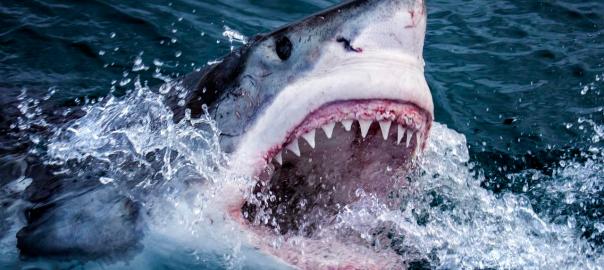
My classes tend towards utilizing a lot of “real-life” happenings in the world.  It is no surprise that one of my favorite labs had the students watching a short clip from the popular television show Mythbusters where the team uses the scientific method to debunk the idea that sharks prefer the color red.  To view the video, click here: SHARKS

I honestly cannot recollect where I got this lesson plan or idea from.  I checked all my files and could only find the excel worksheet where I use the Mythbusters: Do Sharks Prefer Red? as the backdrop for the lesson plan on the Scientific Method.  If anyone out there knows where I found it, I would truly appreciate a comment so I can give the proper credit.

I did create or recreate a worksheet that starts at the lower level of thinking.  First, we just watch the short 4 or 5 minute video clip.  Then, the students answer some basic “what did you see” kind of questions.  Then, the students have to watch the video a second time and more carefully detail the scientific method stages as they are being used in the video using the video itself as evidence.  Following that, the students take to the deeper level and are required to come up with their own myth to bust and design a scientific method experiment to test it.

These types of lessons really engage my students because they are so “into” media: music, video, and who isn’t into sharks?